
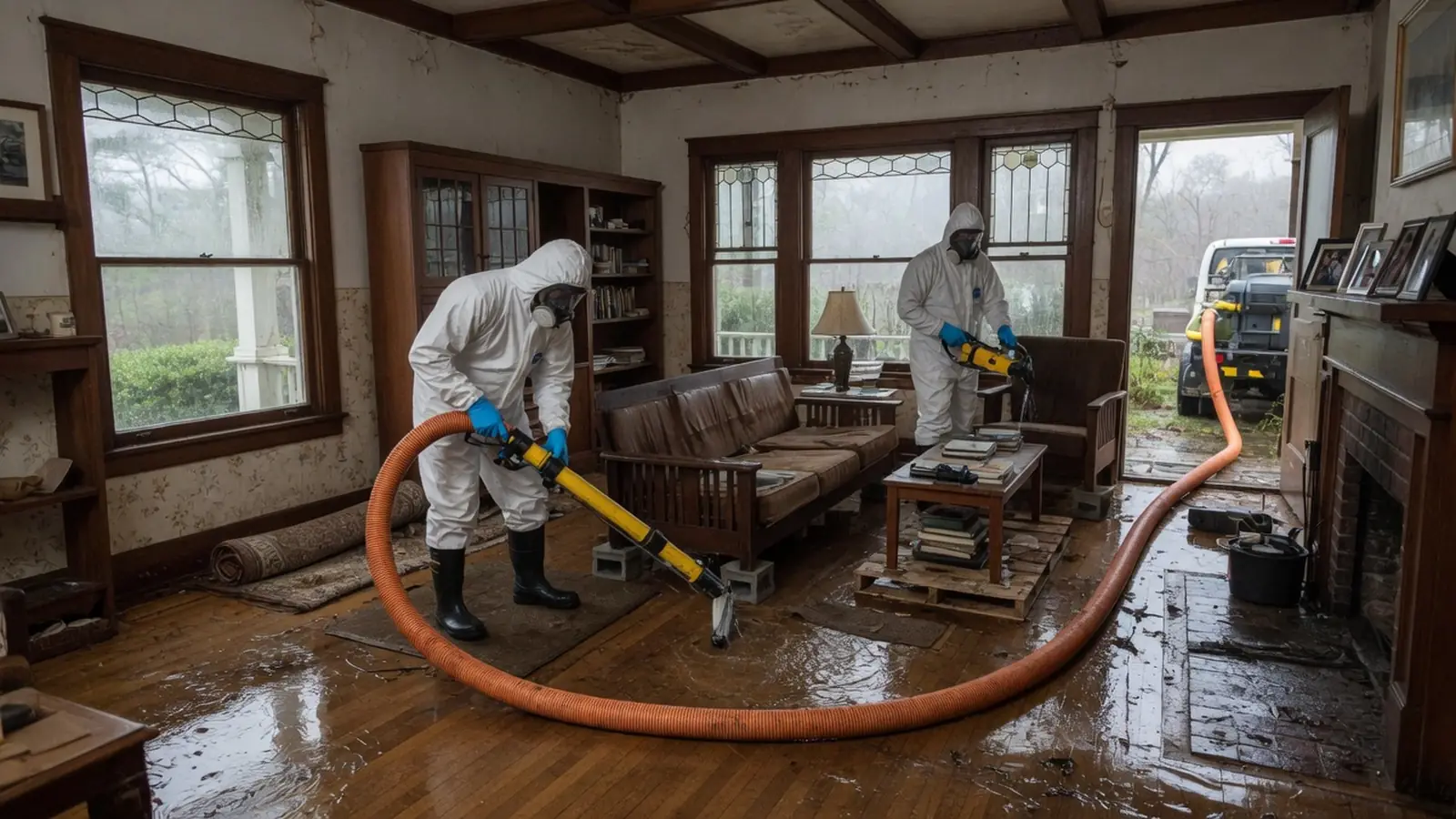
Water Damage Restoration Daly City CA
When broken supply lines or seasonal storm runoff flood your property, our certified technicians arrive fast with commercial extraction pumps and desiccant dryers. We stabilize structural framing, remove standing water, and document every stage for insurance claims.
If water is moving right now, call (650) 555-0172. We'll help you find the shutoff first.
Prefer to talk? (650) 555-0172
Dedicated Moisture Extraction And Structural Drying
Our crew specializes in structural water extraction and targeted structural drying throughout coastal neighborhoods like Westlake and Bayshore.
About 39% of housing units (13,614 of 34,876) were built before 1960, the era of galvanized steel supply lines and cast iron drains prone to sudden failures.
Another 18% of housing units (6,291 of 34,876) were built in the 1960s, overlapping the years aluminium branch wiring was installed that requires careful isolation before drying equipment runs.
Approximately 30% of housing units (10,490 of 34,876) were built in the 1970s and 1980s, overlapping the years polybutylene supply piping was commonly installed.
Because about 87% of housing units (30,395 of 34,876) were built before 1980, the period when asbestos-containing materials and lead paint were still in use, we use negative pressure containment during selective demolition.
We work directly with property owners who need to resolve severe crawl space moisture intrusion before framing absorbs standing dampness.
Every technician utilizes thermal imaging cameras and commercial desiccant dehumidifiers to verify complete moisture removal behind finished walls.
Proven Four-Step Structural Recovery
From immediate standing water extraction to final psychrometric testing, our technicians follow strict remediation standards to schedule urgent emergency storm damage cleanup and prevent secondary mold damage.
- Immediate Extraction And Water Removal. Truck-mounted extraction units rapidly remove bulk water from carpets, subflooring, and concrete slabs to halt moisture migration immediately.
- Thermal Inspection And Moisture Mapping. Infrared cameras and penetrating moisture meters locate hidden pockets of water behind baseboards, beneath tiles, and within wall cavities.
- Industrial Dehumidification And Air Movement. We deploy commercial low-grain refrigerant dehumidifiers and high-velocity air movers to establish optimal drying vortexes in affected rooms.
- Antimicrobial Treatment And Verification. Technicians apply botanical antimicrobials to prevent spores from germinating, and you can find out more about our containment protocols before final sign-off.
Precision Drying Standards
While coastal weather brings heavy winter moisture, NOAA radar recorded 0 hail signatures within about 15 miles between 2021-2025 (2021: 0, 2022: 0, 2023: 0, 2024: 0, 2025: 0). In fact, the heaviest recent hail year around our service radius was 2021, with 0 radar hail signatures inside a 15-mile radius, proving that local water losses stem from atmospheric river downpours, foundation seepage, and aging indoor plumbing rather than hail impacts. We guarantee industrial-grade dehumidification and verified moisture meter tracking to dry building assemblies back to regional dry standards.
Emergency Water Extraction
High-volume submersible pumps and weighted extraction claws extract standing water from concrete slabs and saturated carpets within hours of dispatch.
Structural Cavity Drying
Specialized positive-pressure wall drying systems inject dry, conditioned air into wall cavities to eliminate dampness without requiring complete drywall removal.
Crawl Space Water Removal
We pump pooled rainwater out of flooded crawl spaces, remove wet insulation, and install heavy-duty vapor barriers to protect foundation joists.
Dedicated Moisture Remediation Standards
We approach every water emergency with technical precision, adhering to ANSI/IICRC S500 standards for professional water damage restoration. Property owners can expect transparent communication, calibrated psychrometric logging, and thorough sanitation on every single callout.
- 10Zip Codes Served
- 8Service Areas
- 3Services Offered
Local property owners rely on our emergency response crews when indoor plumbing failures or severe storms threaten structural framing. Here is how our certified technicians resolved recent moisture emergencies for neighbors across the area.
“When our older basement flooded after a pipe burst, the crew immediately filed the emergency mitigation paperwork with city inspectors and documented the pre-1980 drywall containment steps perfectly. The building inspector cleared our repair permit on the very first walk-through without requesting a single revision. Having them coordinate the compliance details saved us days of stressful back-and-forth.”
Marcus G.
“Every single morning at eight sharp, the team texted photo logs showing daily moisture readings across our subflooring so we always knew how the drying was tracking. I never had to call once to ask what step was happening next or when someone would show up. Their proactive updates gave my family complete peace of mind while we were displaced.”
Elena V.
“Rather than tearing out all the custom cabinetry in our kitchen, the lead technician explained how targeted cavity injection drying would preserve the solid wood framing safely. They took the time to show me the moisture levels on their meters and saved us thousands compared to a full cabinet demolition. The restored cabinets dried out cleanly with zero warping.”
Julian T.
“Severe coastal windstorms knocked out neighborhood power right in the middle of our crawl space extraction project, but the crew brought in high-capacity generators within two hours to keep the pumps running. They worked late into the evening to recover lost time and kept the overall drying timeline right on track. Their ability to pivot around site constraints was impressive.”
Brenda K.
Frequently Asked Questions
Does homeowners insurance cover water that entered the ground-level garage from surface hillside runoff during a severe rainstorm?
Standard homeowners insurance policies typically exclude surface runoff unless you carry a specific flood policy covering overland water flow. In hillside subdivisions, rainwater flowing down slopes is classified as surface water or flood damage rather than a sudden internal pipe burst. We document structural moisture conditions immediately to assist your claims adjuster with factual site records.
Should I install an interior French drain and vapor barrier encapsulation immediately after clearing standing water from my crawl space?
You must fully dry structural subflooring and framing timber before encapsulating soil or installing interior drainage systems beneath your home. Sealing damp soil too quickly traps moisture inside crawl space timbers, accelerating microbial growth. Once our commercial dehumidifiers bring moisture content below safe thresholds, drainage contractors can proceed with perimeter trenching and membrane encapsulation.
Who should I call first when severe standing water pools across my crawl space after consecutive storms?
You should call a certified water mitigation specialist first to extract standing floodwater before hiring drainage contractors or plumbers. When severe standing water pools across crawl spaces after consecutive storms, creating an urgent need for sump pump drainage, immediate extraction protects floor joists. Homeowners experiencing rain-induced crawl space seepage struggle to determine whether mitigation requires a plumber, foundation specialist, or drainage contractor, so our technicians evaluate the intrusion pathway and pump out pooled moisture rapidly.
How do you stop seasonal rainwater from penetrating and pooling across concrete garage slabs during winter storms?
Water mitigation crews extract standing pools and install industrial air movers to dry garage concrete slabs before moisture migrates indoors. When seasonal rainwater penetrates and pools across concrete garage slabs during heavy winter storm events, prompt vacuuming protects stored belongings. Furthermore, homeowners trying to stop chronic crawl space flooding need reliable primary and battery-backup sump pump configurations to withstand power outages.
How quickly can structural drying equipment stabilize building materials after an indoor pipe rupture?
Commercial extraction and structural drying equipment typically stabilize wet framing and drywall within three to five days of continuous operation. Daily moisture mapping using calibrated penetrating probes verifies that subflooring, wall plates, and cavity insulation reach balanced moisture content before reconstruction begins.